A great electric fireplace makes a room feel finished. It adds glow, comfort, and “instant cozy” without the mess. No ash, no smoke, no chimney drama. If you’re new to electric fireplaces, this page will help you shop smart and avoid regret buys.
I’ll walk you through the main options, must-have features, realistic expectations, price ranges, and install basics. Then I’ll point you to deeper guides on this site.
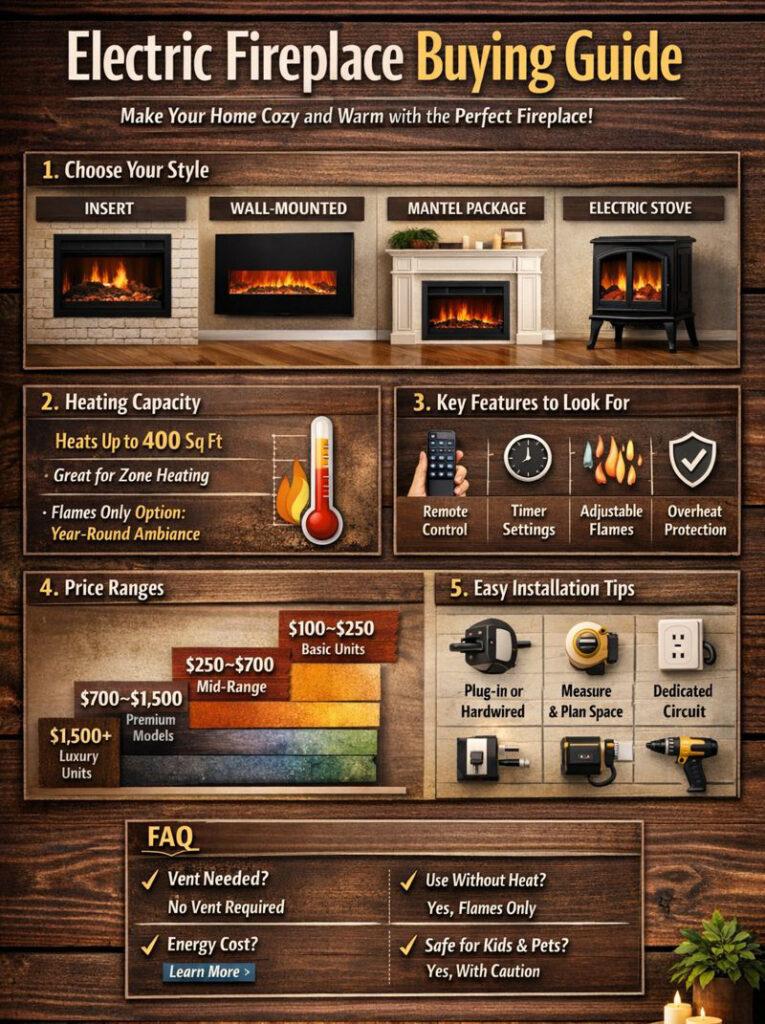
Step 1: Pick the Right Fireplace Type
Electric fireplaces come in a few main styles. Your room layout usually decides this first.
1) Fireplace inserts
These slide into an existing fireplace opening or a framed cavity. They’re the best choice for a built-in look.
2) Wall-mounted fireplaces
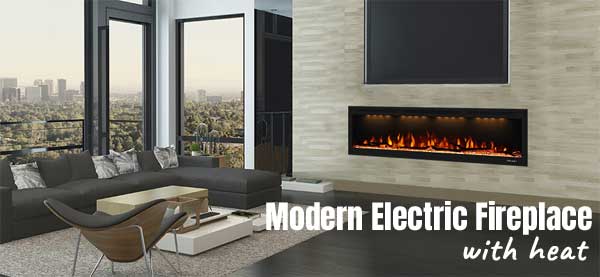
These hang on the wall like a TV. Many can also be recessed for a cleaner finish. They’re popular for modern rooms and tight spaces.
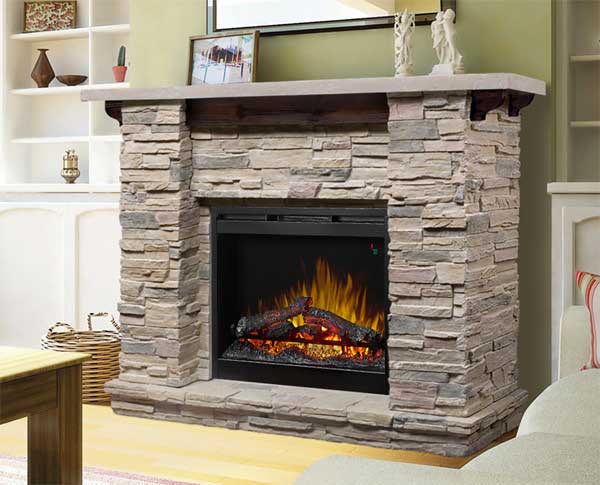
3) Mantel packages
These are “all-in-one” kits. You get the mantel plus the firebox. They’re great if you want a traditional focal point fast. No custom carpentry needed.
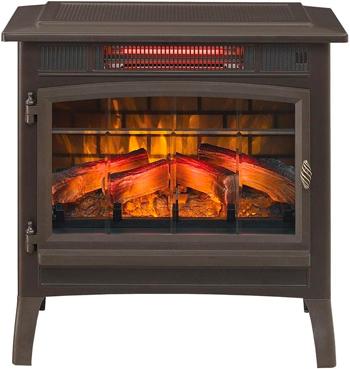
4) Electric stoves
These are small and portable. They’re perfect for a bedroom, office, or apartment. They’re also budget-friendly. Many people use them as a flexible zone heater.
Step 2: Know What “Heat” Really Means
Most electric fireplaces use a fan-forced heater. Many are rated for about 400 sq ft. That’s common and realistic. Think “supplemental heat,” not whole-house heat.
Some infrared-style models claim larger coverage. Results depend on insulation and layout. Open floor plans dilute heat fast.
If you already have central heat, use your fireplace for zone heating. Warm the room you’re using. Turn your thermostat down a bit. That’s where savings can happen.
Also, many units run flames with no heat. That’s a huge perk. You get ambiance year-round for very little power.
Step 3: Decide What “Realistic” Means to You
Here’s the truth: no electric flame looks exactly like wood. But some look surprisingly convincing from normal viewing distance.
If realism is your top priority, focus on three things:
- Flame motion: Look for irregular flicker, not a looping pattern.
- Log and ember detail: Glowing embers help a lot.
- Firebox depth: Deeper boxes usually look more natural.
Some models add features like crackling sound. Others focus on color effects. If you want fun visuals, multi-color flames can be a win. If you want classic vibes, stick to warm amber.
Step 4: Features Worth Paying For
A lot of listings look similar. These features separate the good ones.
Remote control + touch controls
You’ll use them constantly. A remote is non-negotiable for most rooms.
Timer and sleep settings
Great for bedrooms and evening use. Set it and forget it.
Brightness and flame speed control
This matters more than people think. Too bright looks fake. Too dim looks dull.
Overheat protection
This should be standard. I still check for it.
Two heat settings
A low setting is useful in small rooms. It prevents overheating.
If you want to compare operating cost, start with this guide: Electric Fireplace Running Cost Explained
Step 5: Price Ranges You Can Expect
Prices shift, but these ranges stay pretty consistent.
- $100–$250: small stoves, basic wall units
- $250–$700: better wall mounts, many inserts, nicer flame effects
- $700–$1,500: premium inserts and mantel packages
- $1,500+: large designer units, extra-long linear fireplaces, higher-end finishes
Pay more when you care about flame realism, build quality, or a true built-in look.
Step 6: Installation Basics
Electric fireplaces are easier than gas or wood. But there are still rules.
Plug-in vs hardwired
Many units plug into a standard outlet. Some allow hardwiring for a cleaner look.
Circuit planning
A heater can draw real power. A dedicated circuit is smart. It reduces nuisance trips.
Recessed installs
Measure twice and confirm clearance. Heat vents must stay unobstructed.
Wall mounting
Mount into studs or use proper anchors. Don’t trust drywall alone.
If you’re shopping for a recessed unit, pay attention to the “rough opening” size. That number matters more than the advertised width.
Reputable Resources For Safety And Planning
- U.S. Consumer Product Safety Commission (CPSC)
- National Fire Protection Association (NFPA)
- Energy Saver (U.S. Department Of Energy)
Frequently Asked Questions
Do electric fireplaces need venting?
No. They don’t produce combustion gases. That’s a major benefit.
Can I use an electric fireplace without heat?
Usually yes. Many units run flames-only. It’s ideal in warm weather.
How much electricity does an electric fireplace use?
Flames-only is cheap. Heat mode costs more. See the detailed breakdown here: Cost To Run An Electric Fireplace
Are wall-mounted fireplaces safe around kids and pets?
Most have cool-to-touch glass. Still keep clearance. Use common sense.
What size should I buy?
Match the fireplace width to your wall or console. Bigger walls need bigger units. Tiny rooms look best with slimmer models.
Conclusion
Buying an electric fireplace is mostly about fit and priorities. Pick the right style first. Then choose your must-have features. Finally, match your budget to the look you want.